
Sea & Steel – History – Part 1 of 4


Set sail with us today as we delve into the historical world of Sea & Steel: Columbus’ Voyages! In this first of a four-part series, we’ll set foot alongside Antonio Vaquera (game designer) as he shares the historical background on Christopher Columbus’s first voyage.
Get ready to uncover fascinating facts and immerse yourself in the age of exploration!
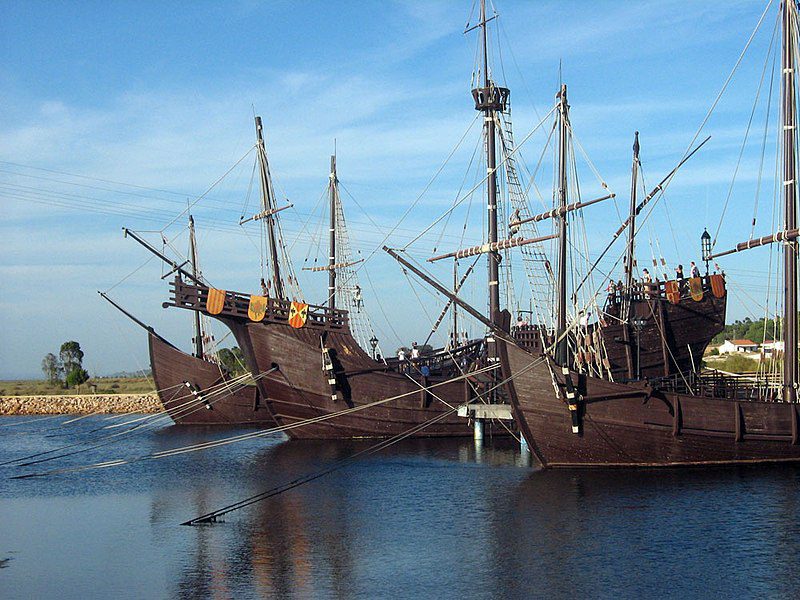
located at the Muelle de las Carabelas (Palos de la Frontera, Spain).
Author: Edward the Confessor
Summarizing the entire story of the Discovery and Conquest of the Caribbean Islands during the Four Columbian Voyages in just a few pages is a daunting task, given the vast amount of information that would need to be processed and condensed.
In any case, I want to make it clear that we are at the end of the first quarter of the 21st century and that it is very difficult – if not impossible – to understand with our current mentality the way of proceeding of both the so-called “Spanish” side in the game, and the “indigenous” side, for which reason we deliberately leave aside any judgment of the legal or moral type that inevitably accompanies this theme.
The following is a brief historical summary in which the most relevant events that took place during the years 1492 to 1503 are briefly recounted, covering Columbus’ Four Voyages to what was called the New World, focusing solely on the Caribbean Islands, since the occasions on which he “touched” land on the Continent were not so relevant.
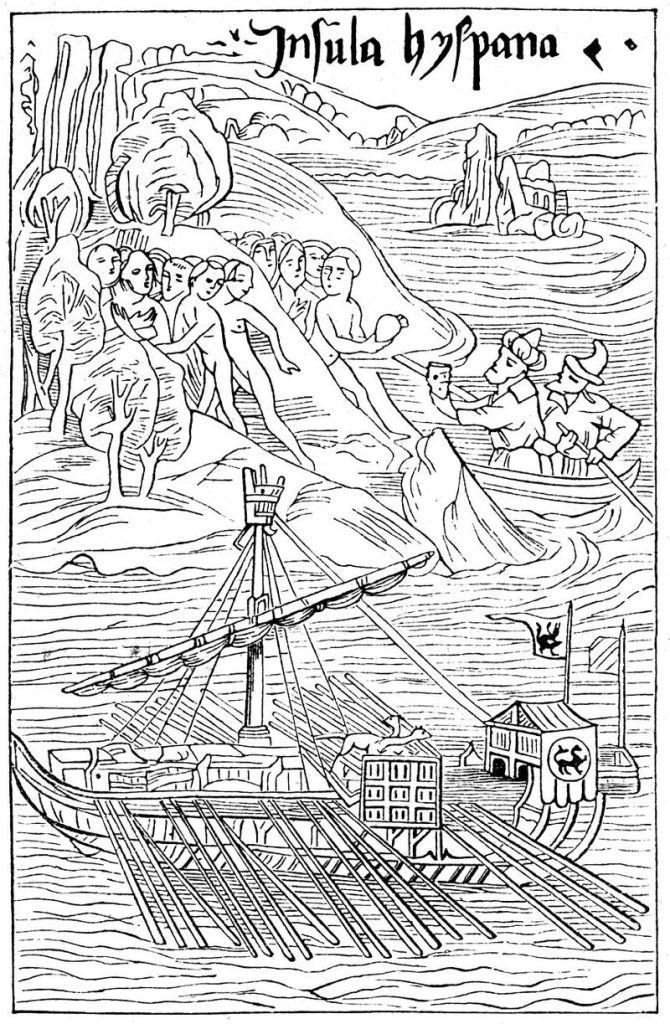
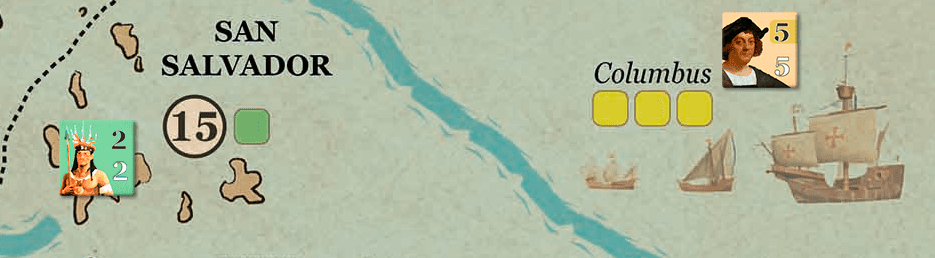
Regardless of the ups and downs of Christopher Columbus’ life and the historical evolution of the Pre-Columbian Caribbean, we must focus on the date of October 12, 1492 (the moment the game begins). This is a significant date in history, as it marks the moment when Christopher Columbus, in the service of the Catholic Monarchs of Spain, reached what is considered the New World. This event is commemorated as the discovery of America by Europeans. Columbus, who had sailed from Palos de la Frontera on August 3, 1492, with three ships – the Santa María, the Pinta, and the Niña – arrived at an island in the Bahamas that the natives called Guanahaní, which Columbus renamed San Salvador (Area 15 of the game map).
This discovery opened the door to European exploration and colonization of America, initiating a period of exchanges, conflicts, and profound changes that altered world history. October 12 is celebrated in various countries of America and Spain, and receives different names depending on the place, such as Day of the Race, Day of Hispanity or Day of Respect for Cultural
Diversity.
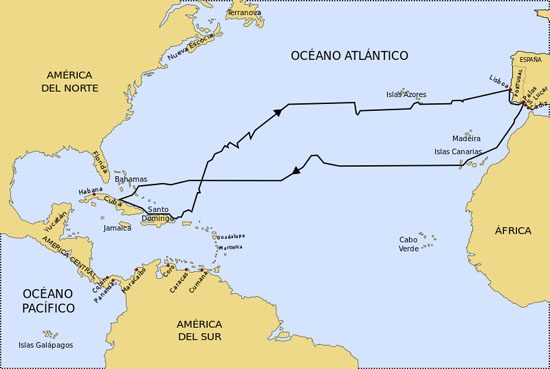
First Voyage (1492-1493):
Columbus and his crew explored several islands in the Caribbean, including what we know today as Cuba (which Columbus called Juana) and Hispaniola (Haiti and the Dominican Republic). Columbus had several encounters with the natives, exchanging goods and observing their customs. Columbus believed that he had reached islands near Asia, such as Cipango (Japan) and Cathay (China).
Martín Alonso Pinzón, one of Christopher Columbus’s main collaborators and captain of the caravel Pinta, separated from the other two ships at some point in late November or early December 1492. The exact reason for this separation is not entirely clear and has been interpreted in various ways by historians.
On December 25, 1492, the ship called the Santa María was wrecked on Hispaniola. Guacanagari, a Taíno cacique from the region, came to the aid of Columbus and his men. He provided them with shelter, food, and assistance in rescuing the goods from the wrecked ship. The Taínos of Guacanagari showed hospitality and generosity towards the castaways. With the help of Guacanagari, Columbus decided to build a small fort called La Navidad using the remains of the Santa María. This was the first European settlement in the Americas. Columbus left 39 men in La Navidad under the command of an officer, trusting that Guacanagari would protect them.
The Pinta and the Santa María were reunited on January 6, 1493, in Hispaniola, after several weeks of separation, and on March 15, 1493, Columbus returned to Palos de la Frontera, Spain, and was received with honors.
 English
  Spanish
3 comments