
The Hidden Story Behind the Iconic Photo

Here is an interesting fact I discovered while researching this battle. The iconic image that inspired me to select Iwo Jima was, in fact, that of the second American flag to be raised. After the U.S. Marines secured the summit of Mount Suribachi on D+4, they took a pipe from a Japanese radar station at the top and attached a 137 x 71-centimeter flag, raising it over Mount Suribachi at 10:20 a.m. Sergeant Louis R. Lowery documented the event.

Moments after raising the flag, a roar erupted from below Mount Suribachi as Marines on the ground, engaged in combat, spontaneously cheered at the sight of the flag. The moment was deeply impactful, with the prolonged shouts and cheers audible from the summit of Mount Suribachi. In addition, ships on the beach and ships at sea joined in, sounding their horns and whistles. This emotional and patriotic moment was truly extraordinary.
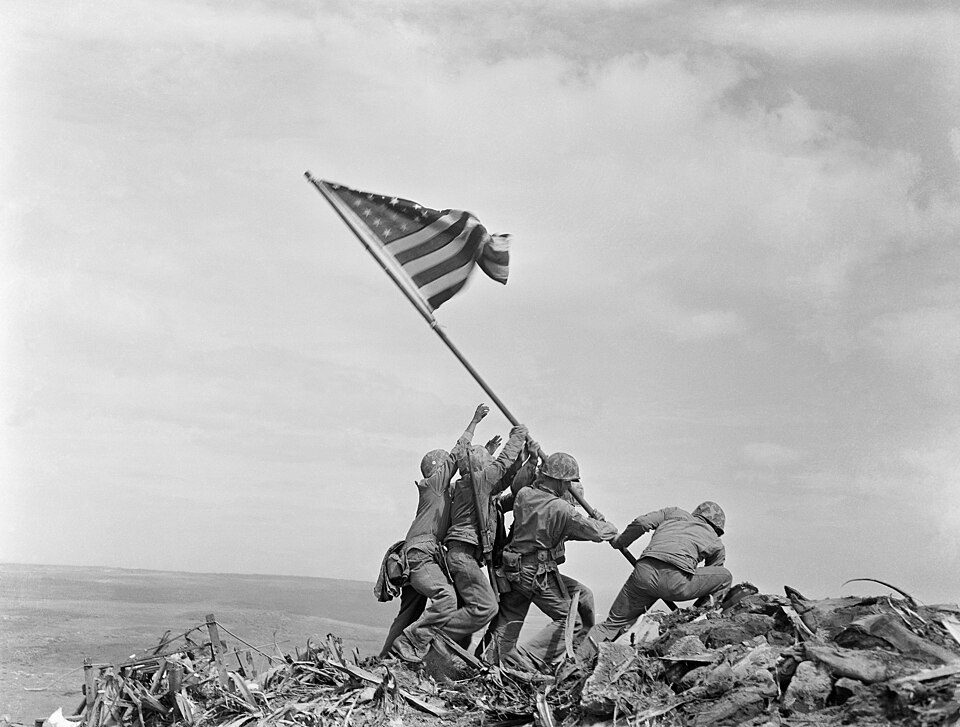
However, Colonel Johnson learned that Secretary of the Navy James Forrestal wished to keep the small flag. Consequently, the original flag was removed and replaced with a larger ceremonial flag from LST-779, resulting in the capture of the famous photograph we all know today.
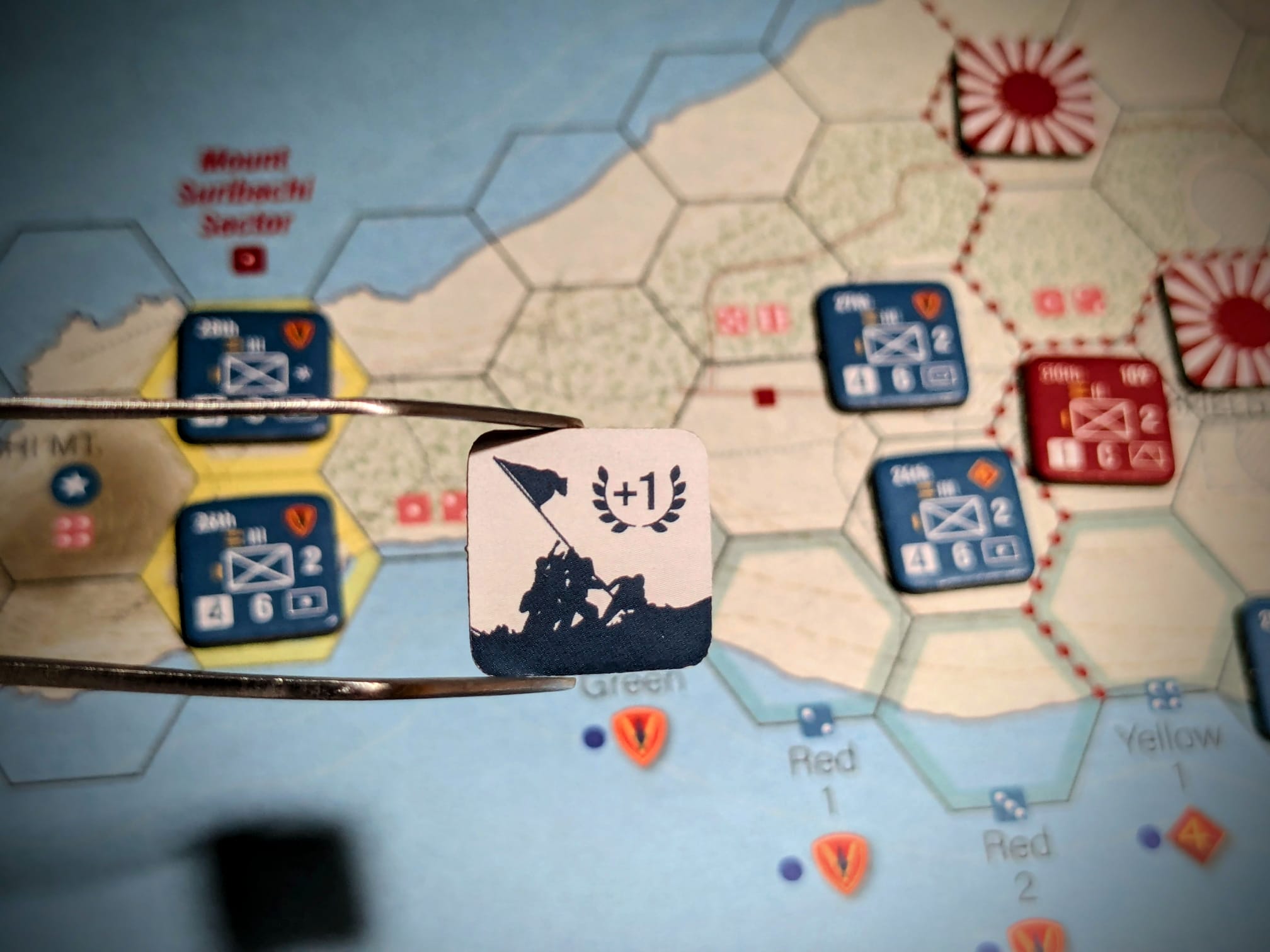
In Iwo Jima: Hell on Earth, capturing Mount Suribachi is crucial, just like seizing the three airfields. If your US forces secure Mount Suribachi before the end of Game Turn 3, you’ll get a Victory Point! Check out the “Rising the Flag” marker on our game board (pictured above).
 English
  Spanish