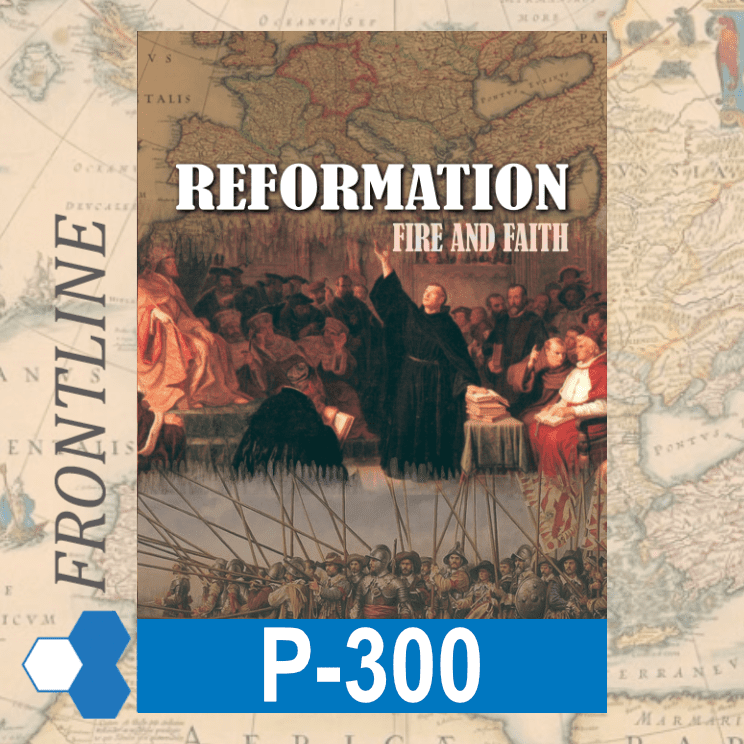
P-300 New Game! Reformation: Fire and Faith

We’re thrilled to announce a new title from Clint Warren-Davey for the Neva Wargames P-300 Program!

Many of you have asked about our focus on 1-2 player wargames, wondering, “Where are the multiplayer titles?” While we’ve announced one 1-4 player title so far, we know that’s not enough—we’re finally closing that gap! Get ready: a brand new multiplayer game is now joining our P300 program!

Artwork is provisional, and a graphic designer has yet to be assigned, but we are actively working on it. Expect more exciting news soon.

MODERN | STRATEGIC | 2-6 PLAYERS  | DURATION 60-90′
GAME DESIGN: CLINT WARREN-DAVEY

Reformation: Fire and Faith is a game about the wars and religious struggles that raged in Europe from 1517 to 1555. This time saw the Protestant Reformation sparked by the renegade monk Martin Luther and the subsequent wars of religion in Germany and elsewhere, as Christianity was shaken to its core on. It saw numerous wars between the great powers of Europe regardless of religious affiliation. The Ottoman Empire was at its height and threatened the Christian world from the south-east, while at the same time new lands were discovered in the Americas that started a race for colonial expansion. In this game, 2 to 6 players will use their Armies, Fleets, Followers and Churches in an attempt to achieve their victory conditions and attain the most Victory Points (VP). It plays in about 60-90 minutes. The rules are very simple and easy to teach as the game was originally designed for use in a high school setting by the highly experienced game designer and teacher, Clint Warren-Davey. The game includes 6 unique Factions that are all competing for dominance in their own way:

Protestants are a religious faction that will spread quickly across Germany, France, and England. Their power lies not in wealth or armies but in the growing number of followers, inspired by translated Bibles and fiery preaching. They challenge the Papacy in debate, rally believers in towns and cities, and use knowledge to build momentum, striving to reform Christendom from within.

Papacy is the spiritual heart of Catholicism, seeking to defend the old faith and counter the Protestant tide. Building churches and leading theological debates, it uses both persuasion and authority to strengthen Catholicism. The Papacy can recruit armies or fleets, when necessary, but its greatest power lies in guiding the faithful, removing heresy, and ensuring that the Church remains supreme across Europe.

Habsburgs are the mightiest dynasty of 16th-century Europe, commanding vast armies and rich fleets. Their empire stretches across the continent and beyond the seas, granting them unmatched opportunities for trade and exploration. They are staunch defenders of Catholicism, persecuting Protestant dissent wherever their soldiers march, while seeking both glory and wealth through conquest and discovery.

England is a kingdom on the rise, seeking to expand its influence at home and abroad. With fleets exploring distant oceans, it can gain wealth from discovery and piracy, especially against rivals like Habsburg Spain. England balances Catholic traditions with Protestant stirrings, wielding both persecution and reform as tools of statecraft. Its armies, fleets, and wealth all aim to secure dominance in Europe and across the seas.

France is a powerful Catholic kingdom that balances rivalry with the Habsburgs and its role as a defender of the faith. Its fleets sail outward in search of wealth and glory, while its armies suppress Protestant dissent at home. France can raid and pirate against Habsburg fleets, undermining their strength in the Atlantic. With both political and religious stakes at hand, France is torn between tradition and the winds of change.

Ottoman Empire is a formidable Muslim power on Europe’s eastern flank, threatening Christendom with vast armies and mighty fleets. Its naval strength dominates the Mediterranean, allowing it to raid Catholic shipping and undermine the Habsburgs at sea. The Ottomans care little for Europe’s religious squabbles, focusing instead on conquest, power, and wealth to expand their empire into both Europe and beyond.

Wishlist “Reformation: Fire and Faith We’re kicking off playtesting soon on our Discord server. If you’re interested in being one of the first to experience the game and help shape its development, join our Discord community here and head over to the #reformation section to let us know!
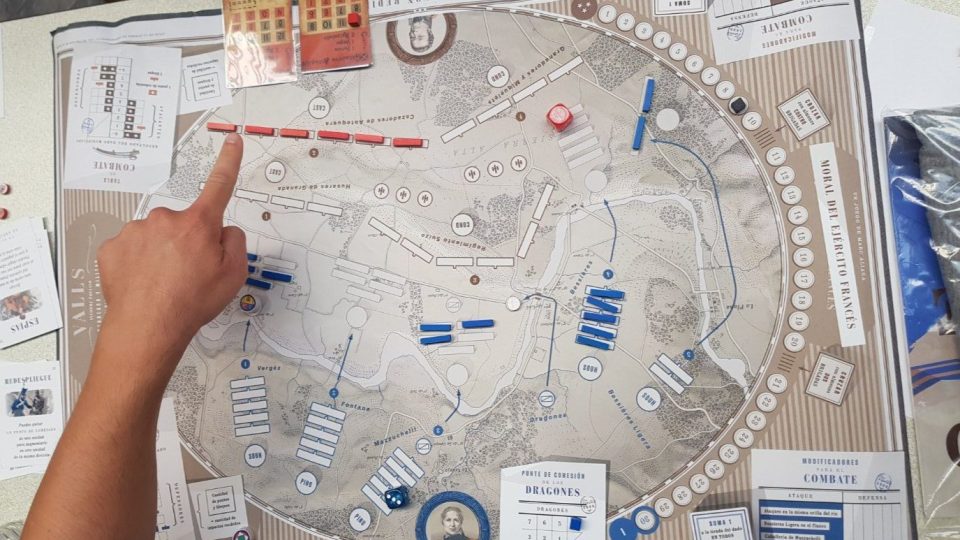
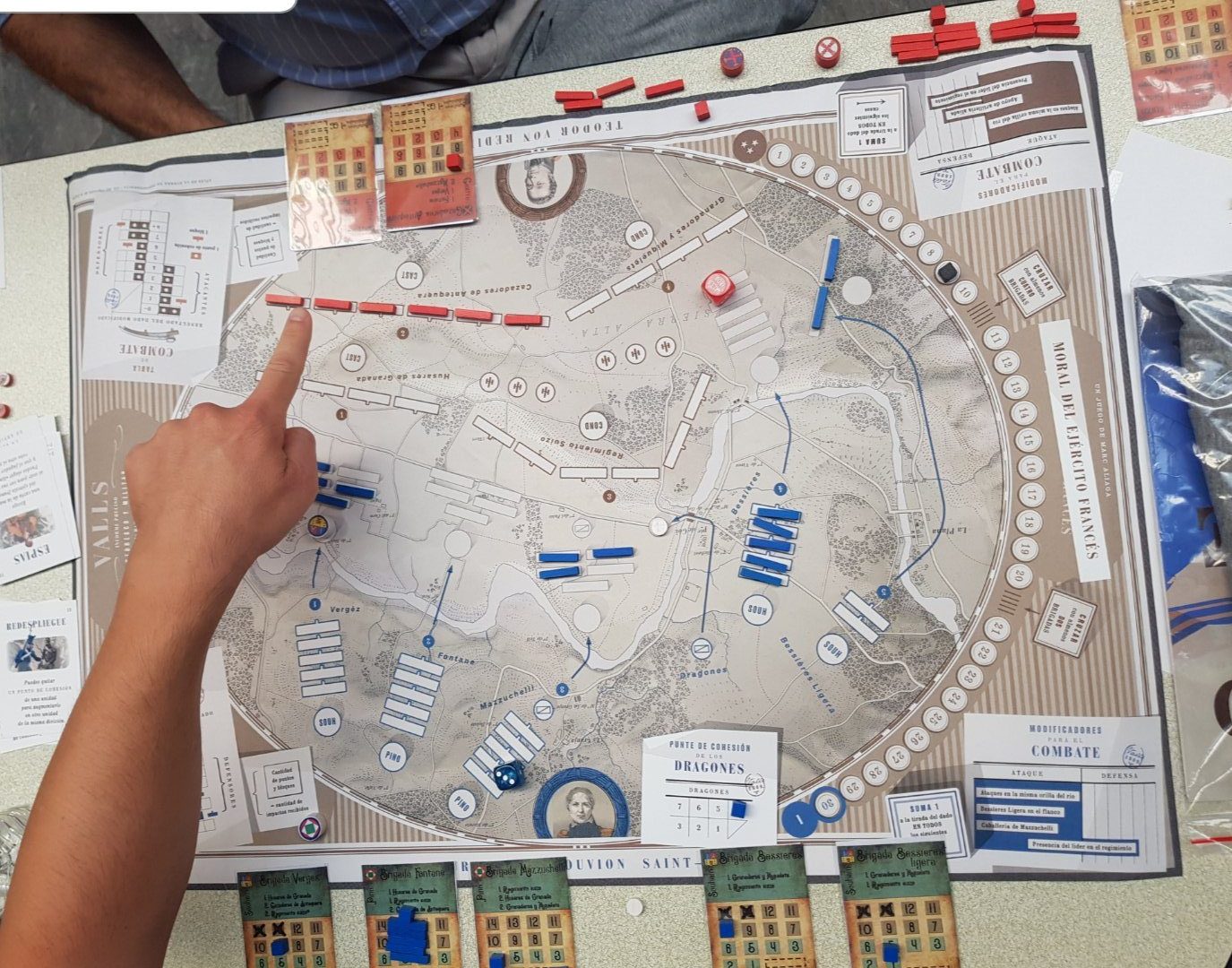
P-300 New Game! Valls 1809: Battle of the Goi Bridge

We’re thrilled to announce a new title from Marc Aliaga that’s a perfect fit for the Neva Wargames P-300 System!

For fans of Napoleonic games, this new title won’t disappoint. It’s a quick, straightforward game based on a historic clash in Catalonia—easy to learn, yet a true test of your tactical skill.

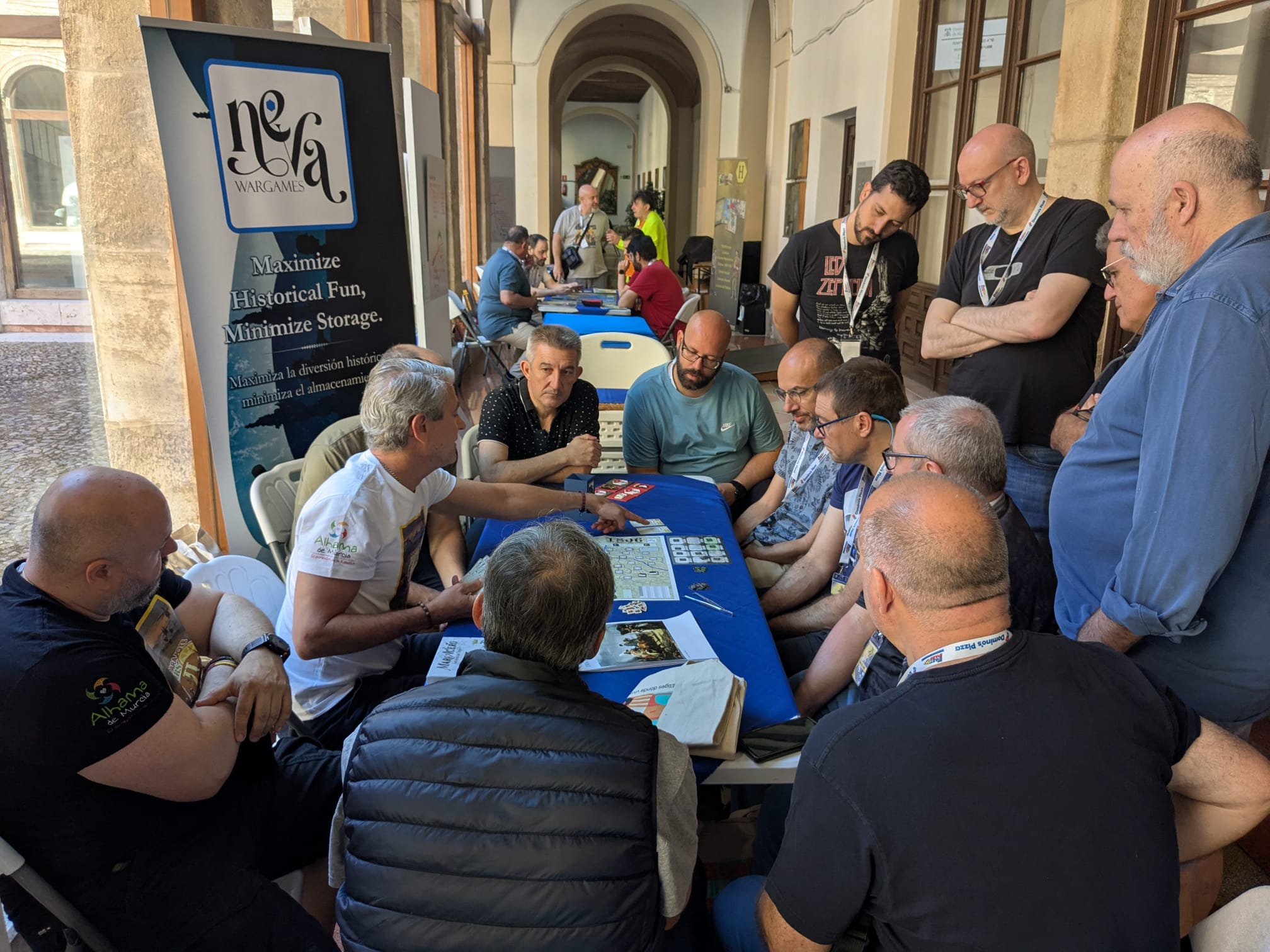
We’ll be showing off this exciting title at the upcoming Pax Lúdica wargame convention in Cádiz the first weekend of October.

What’s most important is that this title is in the final stages of development. We are preparing to open up final playtesting and proofreading before we send the final files to the printer. Expect to see this game on your table soon.

Artwork is currently being created by Nils Johansson, bringing the game to life.

The French defeat at the Battle of Bailén (July 19, 1808), which saw an entire army corps surrender, was a shocking blow. It forced the Napoleonic troops to abandon Madrid and retreat to the Ebro river, marking a spectacular failure for the first French invasion of Spain.

In response, Emperor Napoleon I decided to intervene directly, leading an army of his best troops. In November, General Gouvion Saint-Cyr entered Catalonia with about 22,000 men. After defeating Spanish troops at Cardedeu, he reached Barcelona on November 17, lifting the city’s blockade.

Shortly after, Saint-Cyr demonstrated his tactical prowess at the Battle of Molins de Rei, where he again defeated the Spanish forces. Despite the French victory, the Spanish troops managed to escape before being completely surrounded and captured.

After these two successive defeats, the Swiss general Teodor Reding took command of the Army of the Right. He reorganized and rearmed his men in Tarragona and set out with a small column to regroup his scattered units. The French army, aware of his movements, deployed around Valls.

Learning that Valls was occupied, Reding changed course towards Montblanc. After several days of skirmishes and maneuvers, and a difficult night march, his troops arrived near the Pont de Goi on the morning of February 25. The Battle of Valls began around 5:30 a.m.

The initial combat was intense. The Spanish attack was repelled, and after several hours of fighting, the arrival of the French Fontane brigade around noon shifted the battle’s momentum. Seeing the new enemy reinforcements, General Reding realized it was pointless to continue attacking and losing more men.

This is where the second phase of the battle begins, fought at the Pont de Goi. The Napoleonic objective is simple and direct: a decisive confrontation to annihilate the Spanish army before nightfall. For the Spanish, the mission is to survive, to wear down the enemy with minimal casualties, and to hold out until dusk to make a safe and orderly retreat.

This game presents an asymmetrical and dynamic challenge. The key is not just what actions you take, but the precise moment you execute them.

If you play as the Spanish, your goal is survival. Can you withstand the onslaught of the terrible French charge across the Francolí river and escape with your army intact?l Duels” series, which will transport you through the most iconic campaigns of the Napoleonic Wars.

If you play as the French, your strategy must be aggressive and coordinated. Can you break through the Spanish defensive lines and achieve victory before nightfall?

Wishlist “Valls 1809: Battle of the Goi Bridge” today! We’re kicking off playtesting soon on our Discord server. If you’re interested in being one of the first to experience the game and help shape its development, join our Discord community here and head over to the #valls 1809 section to let us know!

P-300 New Game! 1806: The Elbe Campaign

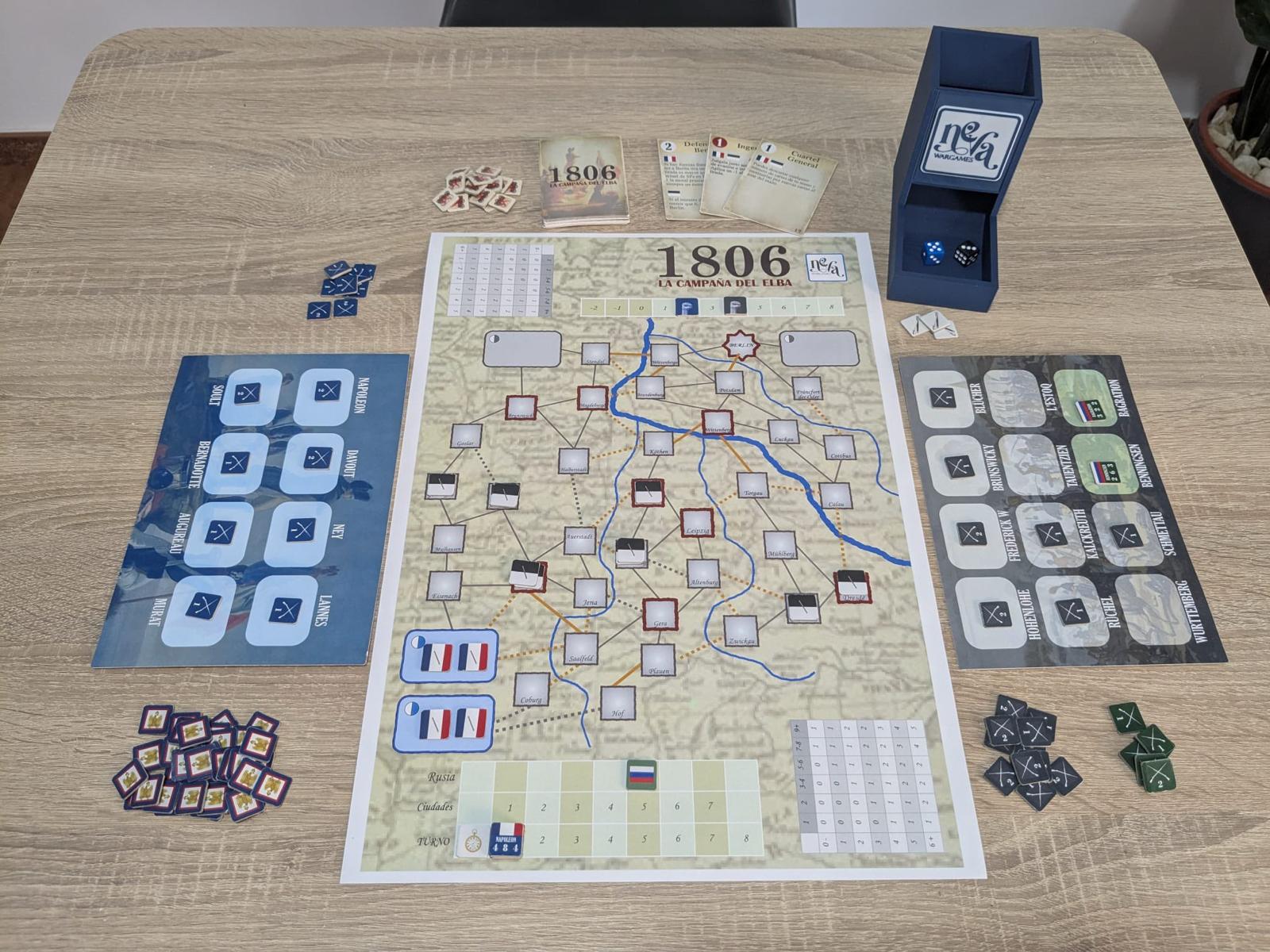
We’re thrilled to officially unveil a new prototype from Santiago González: our very first Napoleonic game for the Neva Wargames P-300 System! This is a period we’ve been eager to explore, and we’ve finally found the perfect match. We initially announced this exciting new title, “1806: The Elbe Campaign,” at the Vassal Forever 2025 wargaming convention on June 8th, where it generated significant buzz as our new “Skirmish” title.

This game is incredibly compact yet packed with fascinating strategic depth. We’ve poured a lot into making it a truly engaging experience. Dive in below for more details, and if you’re as excited as we are to see “1806: The Elbe Campaign” on your table, don’t forget to wish-list it and help us reach that crucial 300 mark soon!

Relive Napoleon’s Masterpiece in “1806: The Elbe Campaign”
Get ready, wargamers! We’re thrilled to announce the latest addition to our P300 system at Neva Wargames: “1806: The Elbe Campaign.” This Napoleonic operational-level game for 2 players delivers an intense experience in up to 120 minutes.


The Stage is Set: A Clash of Empires
The year is 1806. The War of the Fourth Coalition has erupted, drawing Prussia into a desperate alliance with Russia, Saxony, Sweden, and the United Kingdom against Napoleon’s formidable First French Empire.

At this point, Napoleon’s Imperial Army was arguably at its peak. Forged in the fires of Ulm and Austerlitz, his veteran soldiers were a perfectly integrated and highly trained force. On the other side, the Prussian army, once legendary under Frederick the Great, was a shadow of its former self. Their soldiers were largely inexperienced, and even their commanders hadn’t seen battle in over a decade.

It’s said that during his visit to Frederick the Great’s tomb in Potsdam after Berlin fell, Napoleon remarked, “If this man were alive, I would not be here now.” This perfectly encapsulates how Bonaparte masterfully exploited the severe lack of effective leadership plaguing the Prussian forces.


Experience the Thrill of “1806: The Elbe Campaign”
“1806: The Elbe Campaign” plunges you into the initial, critical weeks of October 1806, culminating in the fall of Berlin. This operational-level game is designed for contained duration, offering a dynamic and succinct depiction of this pivotal conflict.

What makes this game truly exciting are its asymmetrical, sudden-death victory conditions. Every decision is critical, ensuring a consistently tense and vibrant experience:

• As the French, you must be aggressive, leveraging your superior mobility and leadership. But beware, early setbacks can crush your morale and decisively impact your campaign.
• As the Prussians, you command a numerically larger force with advantageous terrain, but you’re hampered by slowness and a lack of coordination. Your task is to maneuver wisely, delaying the French long enough for uncertain Russian reinforcements to arrive.

The game’s system emphasizes maneuverability and coordination over mere troop numbers, opening up a wide array of strategic options and providing excellent replayability. Plus, the crucial fog of war, vital for any Napoleonic game of this scale, is represented through simple, clear rules that deliver just the right amount of uncertainty about your enemy’s true intentions, especially in the crucial opening turns.


Can You Rewrite History?
Can you avoid Prussia’s devastating debacle and the fall of Berlin? Or will you emulate Napoleon’s military genius and bring Prussia to its knees?

“1806: The Elbe Campaign” is Volume I of our upcoming “Operational Duels” series, which will transport you through the most iconic campaigns of the Napoleonic Wars.

Wishlist “1806: The Elbe Campaign” today! We’re kicking off playtesting soon on our Discord server. If you’re interested in being one of the first to experience the game and help shape its development, join our Discord community here and head over to the #1806 section to let us know!

en_USEnglish